The latest snowfall has turned the world around us into a winter wonderland. There hasn’t been that much snow, but just enough to make everything look white and “clean”.
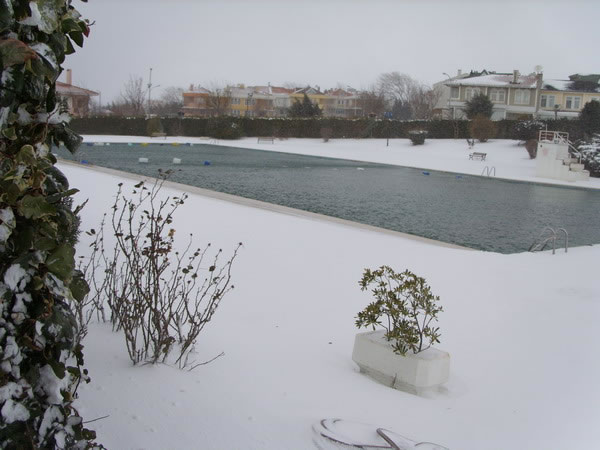
The pool water is real green, which is normal for our pools during the winter. I would much prefer that they were winterized, but I suppose we never really get to see them, so their blue-water summer state is the main priority. As long as the water is clean and sanitized throughout the swimming months, I can live with the slime in our subdivision through the cooler winter months.
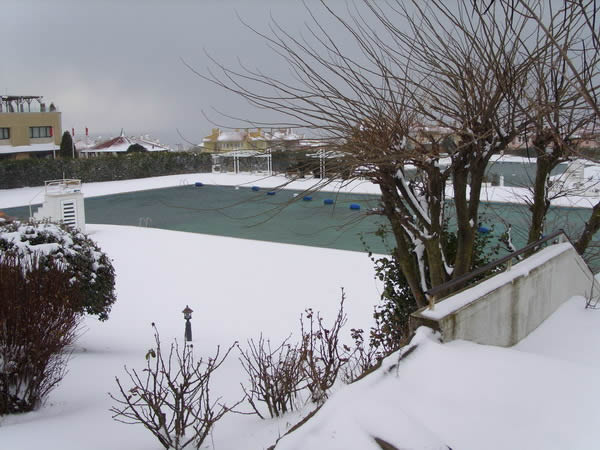
This is our smallest swimming pool, also green. But at over 775,000 gallons winterizing is no easy task. Mind you, spring cleaning is a nightmare at best too. Team effort and a week’s work turns this pool into a sparkling blue pool safe for even my kids to swim in.
The snow will melt in a few days and we will be back to our mild winter weather once again. I have yet to see the pool water freeze enough to support my weight. Well, with all this turmoil of seasons out of alignment, you never know…
Those are real big pools. I bet vacuuming is no fun!
Can you go skating or is there never a big enough freeze.
As a child big pools were skating rinks in winter.
We live in Colorado, after a hard winter, some o-rings for filter and cleaner systems can fail and crack. I found a great resource for replacement parts.
Bob B
If you can keep your pool water algea free until the water temp hits 59 degrees then your pool water will not turn green. Water chemistry self locks at 59 degrees or colder.
The southern temperatures like we have in Georgia keeps the pool tech busier in late fall and winter than if we were living in the north. The floating chlorine dispensers are inexpensive and keep the algae growth in check even when temperatures are on the rise in late winter and early spring. Filling them up ever 4 weeks seems to be the ticket.
John stole my thunder from above. 60 degrees is when algae starts taking over a pool. maintain algae free to 59 degrees and you will have crystal clear pool when opening it.
We have an above-ground pool for the first time; are concerned about whether we should drain and take the pool down for the winter (which is labor intensive) or would we be able to leave it in place, drain some water, and cover it for the winter. Our winter temperatures for this area of the country can run from 50 degrees at one end to zero or slightly below (usually not for an extended time) from December through March. Would appreciate advise from anyone who can relate to our dilemma.
Great post. I think the owner of that pool must use a pool cover to protect the swimming pool from snow.
Keeping a 775,000 gallon pool in healthy condition is no small feat.
Getting professional help would sure ease your load.
Real big pools, how many hours needed to clean them? 🙂
We are in Georgia and we don’t receive such harsh winters as they do up north. Its always interesting to me to learn about the differences in winterization from North to South. Thanks for posting!
Hard to completely winterize a pool that size. Would be nice if you wrote an article about how folks in colder climates like yours are getting it done. Great content on this blog though. Cheers
What a cool article. I cherish this! extremely well instructive. I, myself,don’t know this issue completely and I’m happy that I have unearthed this article before it’s past the point of no return! I imagine that more individuals if not all the pool proprietors on the planet ought to know this since this is something that is truly vital and that will be adverse later on! particularly if the pool proprietors do all the pool related work and cleaning themselves. so thank you for this!
We are a TD Screen and we are a Screen Repair Company that specializes in repairs and remodels of cages and patio Screens. Our company provides service from Miami Dade, Broward County to Palm Beach. We have over 7 years of experience in the field and hundreds of satisfied customers. We offer our extensive knowledge of pool complexes, patio screen, porch screen repairs, and screen enclosures that Floridians can enjoy a better and more comfortable lifestyle.
¡Descubre los últimos juegos gratuitos APK para Android en línea en juegos gratis! Descarga diferentes tipos de juegos, desde acción, arcade, aventuras, deportes hasta rompecabezas, simulación y más.